
Rituals and Ceremonies
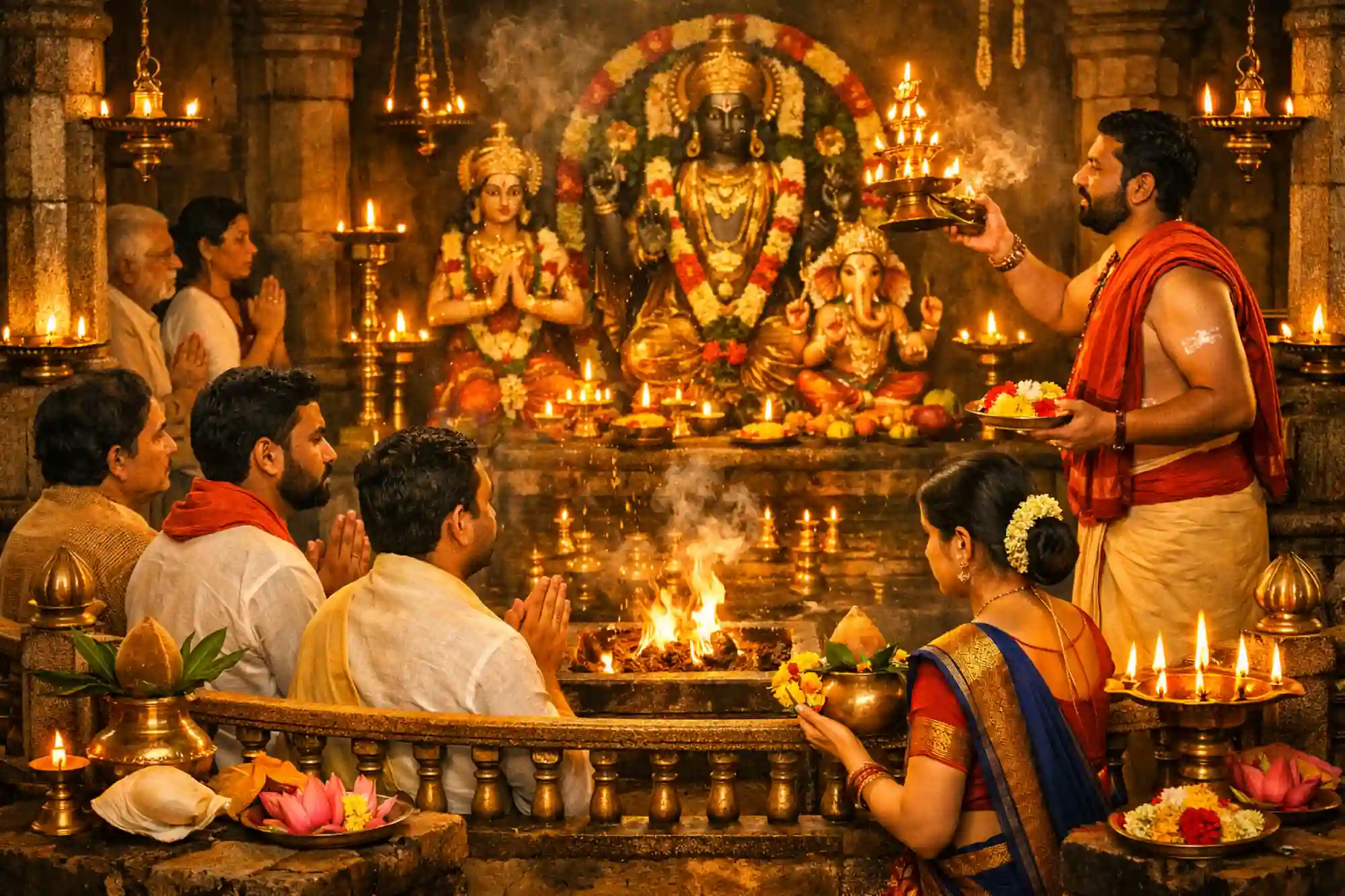
Ancestral rituals and ceremonies are essential in Hindu tradition to pay tribute to deceased ancestors
Types of Ancestral Rituals
- Tarpanam: Offering water and sesame seeds to ancestors
- Shraddha Ceremony: Ritualistic worship and food offering
- Pind Daan: Offering rice balls to ancestors
- Narayana Bali: Ritual for ancestors who died unnaturally
Where to Perform
- Gaya (Bihar): Considered the most sacred place for ancestral rituals.
- Varanasi (Uttar Pradesh): Holy city for ancestral worship.
- Rameshwaram (Tamil Nadu): Sacred place for ancestral rituals.
- Haridwar (Uttarakhand): Holy city for ancestral worship.
- Local temples or ancestral homes.
How to Perform:
Tarpanam
- Choose an auspicious day (e.g., Amavasya or Pitru Paksha).
- Gather materials: water, sesame seeds, rice, and flowers.
- Offer Tarpanam to ancestors, reciting mantras.
- Perform Sankalpa (intention setting).
Shraddha Ceremony:
- Invite a Brahmin priest or perform with family.
- Offer food, fruits, and flowers to ancestors.
- Recite mantras and perform Pind Daan.
- Offer Dakshina (donation) to the priest.
Pind Daan:
- Prepare rice balls (Pindas) with sesame seeds and rice.
- Offer Pindas to ancestors, reciting mantras.
- Perform Tarpanam and Shraddha Ceremony.
Narayana Bali:
- Consult a priest for complex rituals.
- Perform rituals for ancestors who died unnaturally.
- Offer Pind Daan and Tarpanam.
Materials Needed:
- Water
- Sesame seeds
- Rice
- Flowers
- Fruits
- Pindas (rice balls)
- Ghee (clarified butter)
- Dakshina (donation)
Important Dates:
- Pitru Paksha (September-October): Dedicated to ancestral worship.
- Amavasya (new moon day): Auspicious for ancestral rituals.
Contact Details

- Tel: +91 95141 56789
- Email: support@templesofbharath.in
- Contact Timing:
Contact Info
Address
Monday-Saturday: 9.00 a.m. to 8.00 p.m.
Sunday: 9.00 a.m. to 2.00 p.m.